
Traveling as a vegetarian can be tough, but it can also be a delicious adventure. Follow our tips to make being a vegetarian abroad easy.
1) Decide before you leave…
Figure out before you leave what leniency you feel comfortable with. I’ve met vegans who become vegetarians while traveling. We personally allow ourselves to eat fresh fish while traveling. This is completely up to you and how strict you want to take it. Maybe you’re wiling to eat meat occasionally to sample famous local dishes? Either way, try not to beat yourself up too much if you end breaking the rules once in a while. Chances are you won’t be able to be as picky as you are at home. Constantly obsessing over finding out if certain foods are made with chicken broth or beef stock will leave you with a headache and drive your travel-mates crazy.
2) Plan ahead.
If you know that you’ll be taking a 32-hour overnight bus and will be limited to the food at the truck stop, pack a dinner instead. Get creative with local fresh produce. Think about some nonperishable snacks you can keep in your backpack for emergencies. While traveling through Latin America, we had a tub of peanut butter on us at all times. Spread on bread or rolled into a tortilla, it was a (very delicious) lifesaver!
3) Research local dishes before you arrive.
Some countries absolutely embrace vegetarians, while others may be a bit more difficult. Most countries will have some sort of local vegetarian dish. If not, there will most likely be local dishes that can be tweaked to be vegetarian.
4) Learn how to say more than just “I’m a vegetarian” in the local language.
This may seem like a no-brainer but having a few key phrases in your pocket will go a long way. In some parts of the world, being a vegetarian is as foreign as being an alien. We’ve encountered people who think vegetarian means no red meat, or eating just a little bit of ham. Learning the words for chicken, pork, etc. will help you communicate your point and identify on a menu what you can or can’t eat.
5) Be flexible.
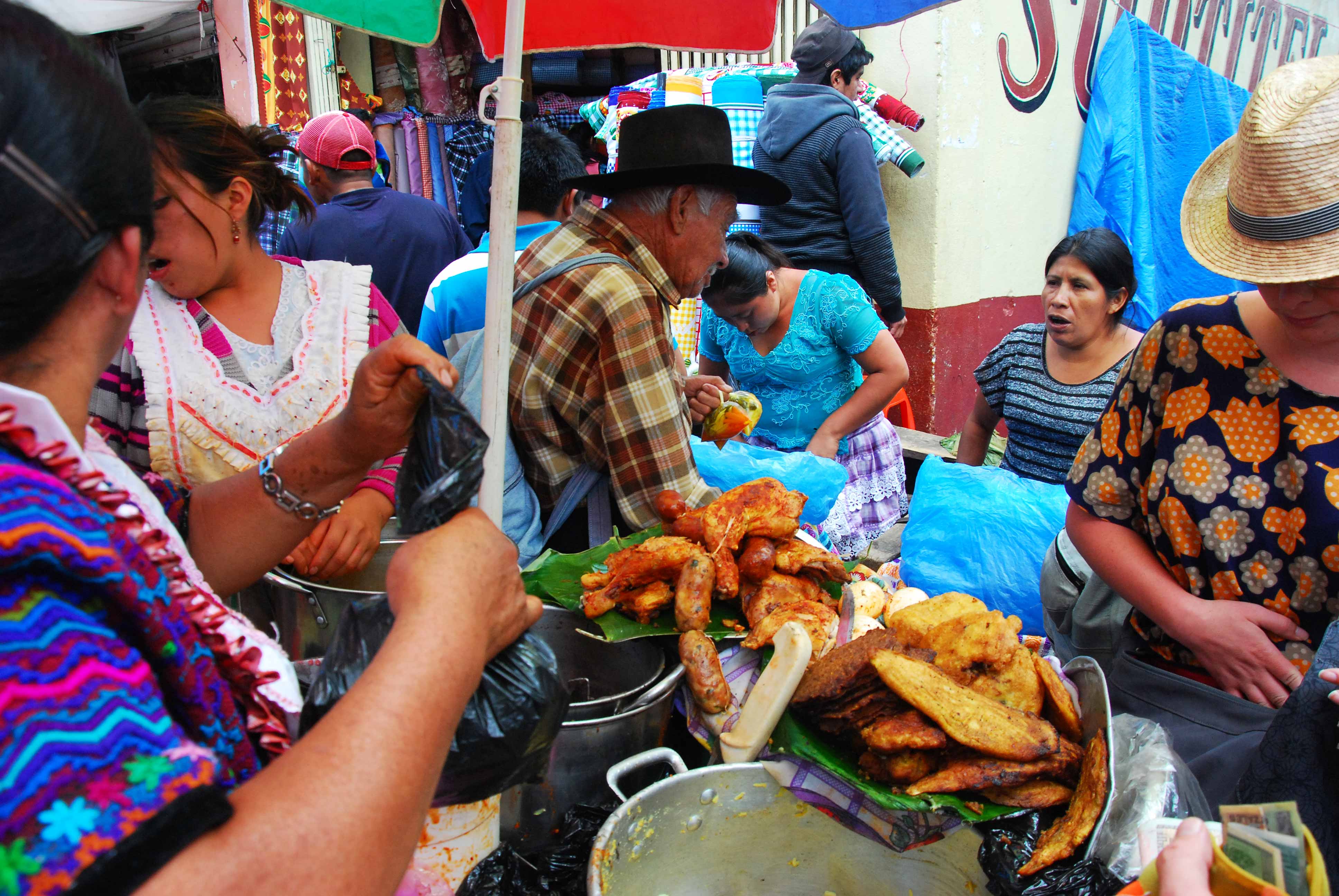
Just like every other aspect of traveling, not everything is going to go according to plan. We were volunteering in the south of Mexico when we were invited to have lunch with a local indigenous family. They served us heaping bowls of chicken soup. We could have politely declined and attempted to explain the ethics of vegetarianism and the reality of factory farming for the next half hour. But considering our lunch was recently clucking around their backyard, I don’t think it would have translated. Instead we were grateful that they were sharing with us and ate with smiles on our faces. Just with any other part of traveling, be respectful and recognize that for many people, choosing to exclude certain food from your diet is a luxury.
Good article! I’m not sure how well I’d do in the chicken soup situation though… Fortunately it’s yet to occur! You’re right though, being prepared is definitely the best way to make travelling as a veggie go well. We always carry a bag of nuts with us, filling, not too heavy and easy to eat in an emergency! 🙂
Yep carrying nuts and easy things like that are good. In Central America we always had a bag of cocoa beans on us to chew on. They were great if you roasted them a little and dipped them in peanut butter! Yum!
As a life-long vegetarian, I don’t compromise on eating meat no matter how great it looks! However I do always try to carry back up and now I’ll have to have the phrase “I’m a vegetarian – not even fish!” written on my hand in the local language! 🙂
hahah love it polly
I’m not vegetarian but I don’t eat beef and know exactly what you mean about the importance of learning some phrases. I’m slowly mastering the art of saying “no beef” in lots of different languages but about time I extend my menu vocabulary!
Unfortunately sometimes learning the language isn’t enough haha. Sometimes you have to learn the hard way when you bite into something that clearly has hidden bits of meat in it. We’ve definitely perfected this conversation in Spanish.
So far we’ve not been in that situation where we’ve had to eat meat so we can’t really say what we’d do in the same position. In the end you really have to do what’s best for you and for the people you’re travelling to meet and learn about.
I certainly agree about learning a little of the local language, if you can!
Yeah that situation was a tough one, but I’m glad we decided to eat it and not say anything. We were out farming in the middle of nowhere, with this tiny indigenous community that barely spoke Spanish. We had to use our friends to translate Tzotzil to Spanish just to communicate with the family and tell them how grateful we were that they shared their home with us. It would have been extremely rude to refuse their food.
We were talking again about this last night with a couple of friends and we both came to the opinion that you can’t judge how other people react in a situation and that sometimes you’ve just got to roll with it, and having nether been in that situation it’s hard for anyone (myself included) to judge how other people manage.
Perhaps I’d do the same, now I’d love to be in such a fantastic situation as yours with locals to find out!
Yea, its hard to say would you do unless you’re in the situation. We had to make a split second decision but I think we made the right one (for us). I hope you do find yourself in a similar situation though because other than the chicken it was amazing!!
“be respectful and recognize that for many people, choosing to exclude certain food from your diet is a luxury” What a powerful statement and so true.
Travis and I don’t have many dietary restrictions so I can’t imagine some of the headaches vegetarians or others run into when traveling. This article shows that it’s not only possible to see the world with restrictions like this but travelers can also experience a lot of local cuisine. Very interesting read 🙂
Great post! I have been a vegetarian for years but sometimes have problems on the road! 🙂 Love your blog!
Thanks Veera! It can definitely be tricky being a vegetarian but usually we make it work. Thanks for stopping by!
Such a great post… luckily for me I haven’t been in a situation like this before..
It’s always great to read articles from travel writing vegetarians. I had been off and on vegetarian but I really committed myself to vegetarianism in – of all places – Japan, where I taught English. I was fortunate in that I was handed a guidebook for vegetarians in the Land of the Rising Sun and it was invaluable.
That’s awesome! It can definitely be difficult while traveling or living abroad but it can also be a fun adventure! People ask us if we feel like we’re missing out because we travel as vegetarians, but we’ve had some incredible experiences because of it!
I totally agree with you guys that planning is crucial. Once you know where to go and what to eat – it’s easy peasy :). I’m not vegetarian, but I try to eat as healthy as possible when travelling.
Yep, planning ahead is super important! Whether you’re vegetarian or just particular about your food, its can be difficult when traveling. But it can also be a fun adventure finding good food! Thanks for commenting!
I actually had one of my best vegetarian meals ever in Korea – a country not known for vegetarianism. I was fortunate because my CouchSurfing hosts were vegetarian and one of them provided me a link to a website with vegetarian restaurants in Seoul. That same host also took me to an awesome Buddhist restaurant in Seoul.
That’s awesome! A good vegetarian meal is often hard to come by when you’re traveling! That’s awesome that your hosts were vegetarian. If we ever head to Seoul we’ll definitely have to get the name of that website!
Nice write-up. When I was traveling to Japan, I asked many times about vegetarian food but it was not there. Indians face this problem a lot outside. In India, if you are vegetarian, it means you completely eat vegetables only and No Meat or sea food!
I liked your 4th number point. Great tips! I will share it with my friends!
Yes we can only imagine that it must be difficult at times. Glad you enjoyed the tips 🙂
Great tips! I would add one more to it – take printouts of pictures of some of the vegetarian food that you expect to find in the country you are going to. My friend and I did that when we went to China and it helped us immensely!
By the way, great website!
Hey Swati, that is an awesome idea! Combining that with the names in the local language would definitely help you get around any language barriers. Thanks!
I feel like so many of these “tips for traveling vegetarian!” articles turn out to basically translate to “well actually, I’m not vegetarian when I travel.” To each their own, but it’s frustrating.
As a strict vegetarian, my tips: be prepared to communicate, don’t be a shrinking violet about it, come prepared with snacks, and realize that food might not be the best part of your trip depending on where you’re going (and that’s OK.)