
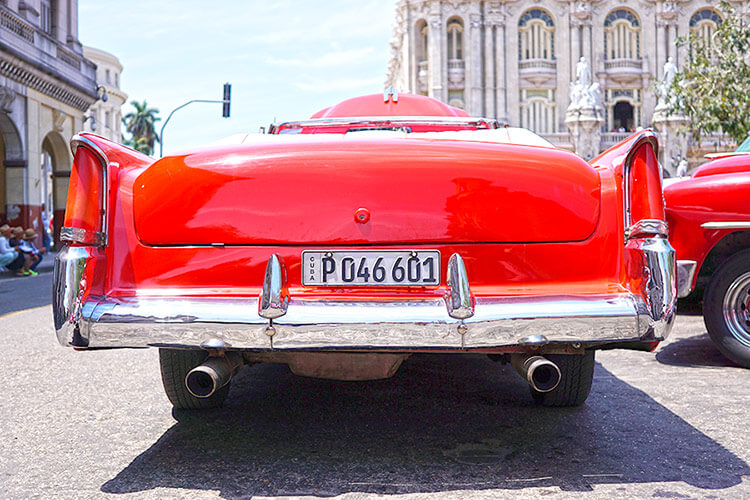
|
Backpacking in Cuba Doesn’t Have to Be Difficult
Cuba, the land of misguided myths and unreasonable rumors. Before we traveled to Cuba we’d already developed a distorted view of what to expect. Stories and information we’d come across told tales of money drama, illegal tourist activities, high priced living and danger.
We’ve now traveled to Cuba twice! Both times for four weeks, once in late 2013 and also in mid-2016. During our trips to this classic Caribbean country we found that these misconceptions couldn’t be further from the truth. Here are some of our favorite myths that we’ve managed to crack wide open!
Cost of Travel in Cuba is Expensive
Wow did we hear this one frequently from fellow travelers, forums and all kinds of mismatched information. This myth is partly true, but mostly fiction. What we found out early is that Cuba has a very evident class system when it comes to the tourists and the locals. The disproportion of costs between local prices (in Cuban Pesos) and the tourist prices (in CUC) is the biggest we’d ever come across. But it doesn’t have to be expensive if you travel and live like a local in Cuba.
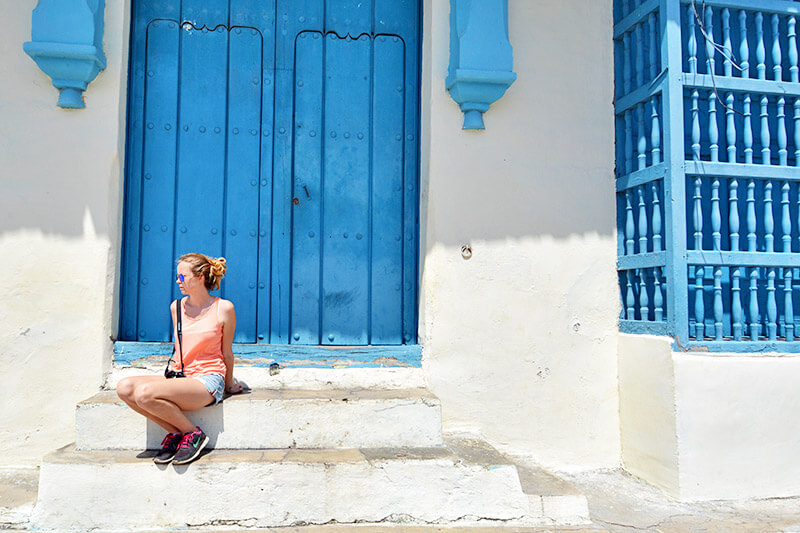
With a little investigation we found that Cuba was the cheapest country we’d traveled through in all of Latin America. The first time we visited in 2013 we were on a bit more of a budget. With accommodation, transport, activities, the odd liter of rum, nights out and food we were spending about $100 a week each, (which isn’t hard when you can eat like a boss with incredibly cheap street food.).
We were traveling light and tight, but we didn’t miss out on any of the action. Sometimes we needed to work a little harder to keep the spending down, but it gave us a great insight into the country.
We traveled Cuba as authentic as we could and we were rewarded with a rich understanding of the country. That’s one of the best things about traveling like a local, you really get to see and experience the country as they do and not from the inside of a hotel and organized tour.

{ Not $3 for 700ml, try 3 Cuban pesos! Equal to 12 cents! Try finding the local brewery trucks for the cheapest beer in the world }
Public Transport in Cuba in Illegal for Tourists
Before we traveled to Cuba we’d heard it was illegal for tourists to take public transport. Once again it’s another myth busted. In fact, not only is public transport a convenient and a great way to engage local life, but it’s INCREDIBLY cheap. I mean practically free. A ride around a local bus cost between 0.20MN-0.40MN or the equivalent of ONE USD PENNY. That’s right, one penny to take public transport. Now all you need to do is work out which bus to get on? How’s that for authentic Cuba!

The network of buses in Havana that buzz around can be daunting, but wrestle your way onto the bus (literally wrestle because the buses get super crowded) and eagerly await the mad rush at each stop. As well as buses there are also a number of transport options to see this amazing country.
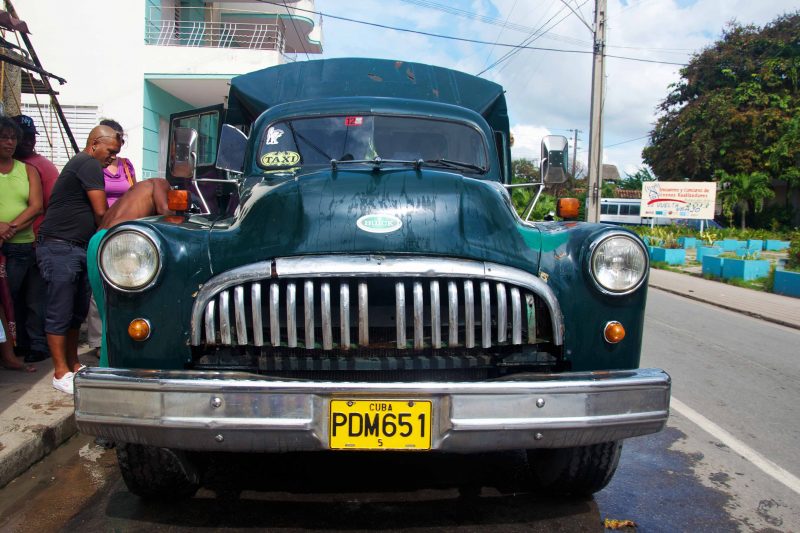
{ Take local taxis and buses to experience authentic Cuban life }
Viazul Buses Are The Only Long Distance Transport
Another completely erroneous rumor that is trying to encourage your use of the Viazul bus company around Cuba. While you may not think it’s much to pay $20 to ride to Trinidad, when you can do it for $3 you have to wonder what you’re paying for. Granted the Viazul ride is a lot smoother, less hassle and gets you there faster, but where is the excitement and adventure in that?
Cuba is an intricate labyrinth of transport methods all waiting for you to explore. And not only that, but it’s real Cuba! You get to travel like the locals and experience authentic Cuban life. The only difficult part is negotiating the trips and finding which particular truck, car, combi, van, camioneta, bus or wah-wah will take you there. Or you could take the train in Cuba, an authentic experience like no other!

{ Why take Viazul when you can ride in this luxury fitted truck? }
Is Cuba Dangerous?!
Like a lot of weary Western travelers it’s easy to understand why there may be a perception that Communist Cuba might be full of menacing dictators and ruthless regimes. However, contrary to the thought, Cuba is by far the safest country we have traveled in throughout all our time on the road. With less guns on the street and harsher sentences for crimes, it’s no surprise that Cuba has a lower crime rate against tourists compared to other parts of Latin America.
Due to the US embargo on Cuba, the Cuban government relies heavily on tourism as a source of income. In fact it’s their number 1 export, and an area that they put a lot of work into protecting. Because of this, street violence and thefts are dealt with by the full force of the government.
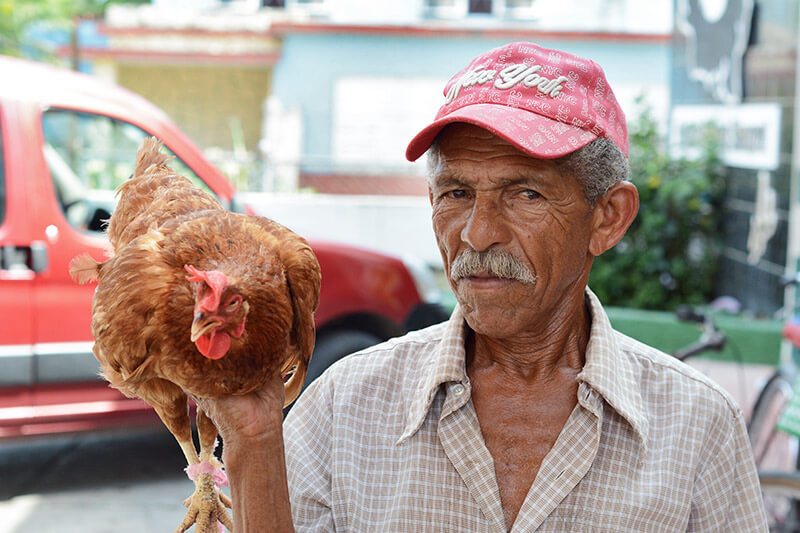
One night we were hanging out with some locals down at the Malecon in Havana when a couple of police officers came down and started hassling the locals for IDs and telling them to leave us alone. Worried that we might get taken for a ride or robbed they almost locked our new buddies up. After numerous explanation they eventually understood that we were now friends and they left us alone, although not without keeping a keen eye on us.
While there’s always going to be the exception from an opportunist thief, Cuba is so safe that we were walking around the back streets of Havana at 12am with our DSLRs around our necks. As always treat all situations with a bit of street wit and common sense, but across the board we couldn’t have found Cuba safer. Especially after almost 2 years backpacking in Mexico, South and Central America it was a refreshing way to end a long trip without constantly being on guard. Cubans are also super friendly and are always interested in having a chat. They’ll tell you all the secrets of the city if you give them the time.

Cuban Currency is Hard to Get
Once again we’re not sure why this rumor was getting around, but it couldn’t be further from the truth. Any time you take your foreign currency into a cadeca (money exchange house) you’ll exchange your foreign money for Cuban Covertible Pesos (CUC). The exchange rate is based off the US dollar, so it’s one for one.
Once you’ve received your CUC currency just ask the cashier to exchange a little bit into Moneda Nacional (Cuban Pesos). Here the exchange rate can change, but is generally around 25 Cuban Peso for every Cuban Convertible (XE.com is the best way to check). If you’re planning on budget travel they’re the only currency you want to have stocked. Street food, local transport, Cuban restaurants and everything else you’ll need to keep the costs down and the experiences genuine.

{ With some Cuban pesos you can buy delicious egg rolls for 10 cents. Something we ate almost every morning! }
These debunked myths are just a few of the things we learned through our Cuba travels, but there is still so much we can help share with you. Throughout the rest of our Cuba articles we hope to show you just how much of an amazing country Cuba is and to help encourage you to strip back those preconceived ideas and get yourself to this incredible country. If you are looking for an authentic experience like no other than we highly recommend you check out The Authentic Cuba Travel Guide below. A resource that we’ve put together to make you travels to Cuba exciting, memorable and as authentic as they get!







Fascinating! Can’t say I’ve ever considered Cuba as a destination, but it was super interesting to read this.
If you ever get the chance we couldn’t recommend it enough. Especially if you can do it within the next couple of years. Cuba is evolving slowly, but change is definitely coming. It will be very interesting to see how it unfolds over the next couple of years when Raul Castro hands over the leadership.
Amazing article!! Since I’ll be residing in Mexico for the first half of this year, I will definitely try to catch one of the cheap daily flights to Cuba 😀
PS. How much time would you recommend to fully explore the island? Three weeks, four?
Yes leaving from Mexico would be the perfect way. To fully explore the island it would take some time. We spent three weeks there and decided we’d prefer to concentrate on the Western half rather than try to do everything. That’s how we love to travel. Slow, thorough and with a great opportunity to learn about the local culture. A month would be a good amount of time to get around Cuba, but whatever amount of time you can get is worth it! You must let us know how it goes if you get there 🙂
very good tips! how about the language issue ? Is that possible to travel around Cuba way as described when you does not know the Spanish language?
It is definitely more difficult than say Mexico, but there are still people floating around who can speak English. Because of their great education system and high influx of tourism there are always people to communicate with if need be.
This is really interesting, I was someone who had been kinda put off going there on account of the high prices,really glad I saw this! What was the accommodation like/how much did you usually pay?
Honestly once we understood how everything works Cuba was the cheapest country by far. In most places we were staying in our own private room, sometimes with A/C for only $5 each. They’re rooms in people’s houses so the accommodation is beautiful. You should get onto it! We’re going to keep writing about Cuba over the next month. Keep an eye out 🙂
Do guest houses and hotels accept the Moneda Nacional? Or do they require you to pay in CUC?
I wish I had known all of this before going to Cuba! It took me too long to figure it out and I got caught up in a few of the traps. Nice article, everyone visiting Cuba on a budget should definitely read this!
Cheers Troy. Don’t worry, a lot of this information came to us towards the end of the trip as well. Now we wish we could go back to Cuba and do ti all again 🙂 Glad you enjoyed the article.
Great resource on Cuba you’ve created here and love the photos.
Thanks Maria. It was an incredible trip, and it has been a lot of fun reliving the adventures in our blog.
I LOVE your “Debunking the Myths of Budget Backpacking in Cuba” !
Really gives great confidence to explore backpacking Cuba asap 🙂
THANKS!!
paul
Cheers Paul! Cuba is not the easiest country to backpack in, but it’s definitely possible! Hope you get there one day 🙂
Great blog! Im going to Cuba within two weeks and was so glad to read your article about all these myths! I just have one question – how did you sleep? Did you stay in casa particular, and do you remember about how much you paid for a room?
Thanks!!
Camilla
Hey Camilla! Thanks for stopping by! Glad to hear our article was helpful. We slept in Casa Particulars! We started at a hostel in Havana ) which was only $5 a night! From there on, we were recommended to different casas through her network and ended up paying $10-15 per room. If you explain to the house owners that you are a student/ poor traveler who travels really cheaply you can get the rooms down to $10 which is perfect if you are sharing! Have fun and shoot us an email if you have any other questions, we love to chat about Cuba!
Cuba is set up to charge visitors many times more for services than locals would pay, from the CUC currency to transportation to accommodations… Navigating to the other, moneda nacional side can be daunting. Thanks for showing how it can be done, can’t wait for more Cuba posts.
Thanks Peter! It certainly can be confusing and there is limited good information on Cuba floating around the web. We are definitely going to be putting up more Cuba post soon!
thanks guys, great post! It just made us decide for Cuba for this years holiday, as you debunked exactly those myths that we were scared about surfing the web prior to finding your page! We are close to booking our flights now and found that they are equally priced year round (from Spain). Workwise we can choose 3 weeks in April/May/Sept/Oct or Nov. What would you reckon is the best time to go? Also, any (guide) books or further websites to recommend? Please keep posting about Cuba, it is very inspirational!
Hey Max, we’re so happy to hear we’ve helped you to decide on Cuba! You’re going to have such an amazing time! My best recommendation for a time to visit Cuba would be early-mid October. The weather is starting to clear up, and it’s before the high season when lots more tourists will crowd the place. Otherwise late October, early November at the latest. As for other websites, we’re not too sure sorry. There’s probably a few more people popping up on the web these days, so keep checking Google 🙂
This is an awesome article! Thank you so much for sharing! My boyfriend and I are headed to Cuba in 3 weeks actually, and we couldn’t be more excited! We definitely want to keep it as cheap as possible so it’s great to finally read a blog that says it’s doable. Are there parts of the country that you recommend seeing more than others? (beaches, national parks, cities)?
Hey Elise we’re stoked to here you and your boyfriend are going to visit this amazing country. I guess it all depends what you’re after. For us we’d explored amazing beaches all over Central America for the last year, so we weren’t too fussed, but they are amazing so check out Ancon and Varadero if you get the chance. How long are you traveling for? I would honestly recommend spending a good chunk of time in Havana, the cultural hub of Cuba! By far our favorite place.
Hi! I’m planning to travel to Cuba at the end of next month but I was wondering if you think it’s a bad idea to travel solo since I’m a young woman? I plan on staying in a casa particular and staying mostly in Havana maybe going to Cienfuegos or Trinidad? Thoughts??
Hey Tamara! I don’t think you’ll have any problem traveling Cuba as a solo female! In fact, Cuba was probably the safest country we visited on our trip. They do a really great job of taking care of tourists. The Casa Particulares are very safe and we saw other solo female travelers around the country. We recommend staying at Hostel Hamel in Havana. They have dorm rooms (unlike the rest of the country) so its really easy to meet other travelers. You might even find a group to see the rest of the country with! Definitely check out Trinidad and Cienfuegos if you have time! Havana and Trinidad were our favorite spots 🙂
I was planning to visit Cuba and by reading your post now for sure I will be going, but I am planning to live for a long time may be a year or longer, which part of Cuba you recommend to live and how I can find a room in a family home? I am looking for a quite place to rest and see the country and experience life as locals do, I hope you can give me some suggestions. Thanks for the great information.
Eddie
Awesome Eddie! Glad we could help inspire you 🙂 Personally I stick with Havana, we absolutely loved it there and there is always so much going on. Let us know how you go 🙂
Hey, thanks for this. I’m thinking of going to Cuba in April, but can only spare 2 weeks off work. It seems Havana, Trinidad and Venales are the obvious places to go, but did you come across anywhere else off the beaten track? I too prefer the slower pace of travel, so want to make the most of the short amount of time! Any itinerary advice very welcome! Thanks.
Thanks for the message Natasha. 2 weeks is a good amount of time for what you’ve already mentioned. You don’t want to rush it too much. I’d say stick with those places, no more. We could easily have spent 2 weeks just in Havana! It is so amazing there!
You all have posted such great information that I must first say THANK YOU!! I will be in Cuba in approximately 2 weeks, and it seems as though the more I read/research, the smaller my budget gets (in a good way) haha. I read that you all were able to get to Trinidad for $3 opposed to taking the Viazul, and that is something I would definitely be interested in! If you could share how that happened (Guagua, Taxi colectivo, etc.) and also where you found them, that would be a tremendous help!! Also, I’ve read that it’s possible to take the bus from the airport to Old Havana, so I wanted to know if you all had any experience with that, or if you had heard anything about it! All help is greatly appreciated!
Brennan
Hey Brennan thanks for commenting. We’re so glad you’ve found our site useful. You’re probably in Cuba now, so sorry for the late reply. But for anyone else interested, the trip to Trinidad from Havana is totally possibly on the cheap. But you’ll have to hassle a bit and have some ok Spanish. You’ll need to take a public bus out of the city to the highways, or at the bus stations you can ask about the cheaper options.
As for the airport, I’m not too sure, but i’m positive it’d be possible. We had a bunch of people so it was cheaper for us to all split a big collectivo. Have fun and enjoy! We’ll be there within the month as well 🙂
What a great article!
I am visiting Cuba next month, but only for 1 week. By the sounds of it, it would seem that it is worthwhile simply spending the whole time in Havana – it may be too rushed to fit anything else in?
If you have a week you may want to pop down to Viñales or up to Veradero for a day, but I wouldn’t recommended spending too much time away from Havana. Personally I think a week would be great to really get a feel for the country without the stress of moving around too much.
Thanks for the read and insight. My girlfriend and I will also be planning a 2016 trip and were wondering if there are any travel books you’ve used to plan your trip that you’d be able to recommend. Traveling like a local on a budget is our game plan, so this has been really helpful in getting our feet wet in the logistics.
Hey David, absolutely do! We just published our very own guide book, The Authentic Cuba Travel Guide. With over 80 pages of tips, tricks and advice to help you travel like a local and save hundreds. Sending you an email now 🙂
Thank you for such a positive article! I can’t wait to travel round Cuba for 3 weeks and will be striving to live like a local.
I am going to Cuba and doing of course my research I found you site. It was immensely helpful. I would like to know if you travel guide is up to date. I will be traveling next week. My husband and I are doing the backpacking. Cant wait.
All info is as up to date as it can be in Cuba haha 🙂
You answered so many questions I had in mind about Cuba. Awesome write up and great tips! I’m really glad that all of that has been cleared, misconceptions like those really discourage travelers to even consider going.
Hi, thank you for your effort with sharing your passion for Cuba. I was wondering if you also went to the East side to try to trevel on a budget to “Los Cayos”?
Hi Tjasa, we did not make it to Los Cayos. Hopefully on our next trip to Cuba!